A Gendered 180
In the 19th century, the gender of ballet dancers swapped. By the 1830s, female dancers were beginning to take a commonplace position on stage. Critics began designating steps to dancers by their gender. Male dancers were given a few minimalistic steps because critics believed that dance was dangerously feminine. In a matter of decades, ballet swung from an art form almost exclusively practiced by men to one almost exclusively practiced by women.
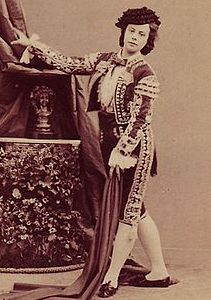
While ballet became more and more women-dominated, ballet performances still included men’s roles. As such, the practice of women performing “en travestie” rose in popularity. Travesty performance included female dancers performing masculine characters, masculine movement vocabulary, and masculine power and status. Travesty is a particularly interesting practice in queer readings of ballet history because of its proximity to both deviant gender identity and performance of romantic storylines by two female dancers. It is reasonable to imagine that the practice of travesty ballet may have held space on and off stage for dancers whose genders and sexualities would now be described as queer. For example, the actress Cora Laparcerie and dancer Therese Essler, who both expressed that they enjoyed stepping into masculine roles.
 Queer Ballet History